
















 Share
Share
Birding Tours around Peru
Transfer to the airport for the flight to Puerto Maldonado. Reception at the airport and transfer by canoe to the jungle lodge. Packed lunch on the canoe. Travelling through virgin rainforest, you will eventually reach the lodge in pristine primary rainforest.17 days / 16 nights.
Arrival in Lima, reception and transfer to your hotel.
Day 2:After breakfast, transfer to the bus terminal for the bus to Pisco, some three hours south of Lima. Transfer to your hotel on the bay of Paracas. A paradise for inshore birds off the Humboldt current, the area is a wonderful introduction to birding around Peru. The Pisco marshes are also crowded with herons and waders as well as local favourites like the dark-faced ground tyrant and the Peruvian thick-knee.
Meals: B
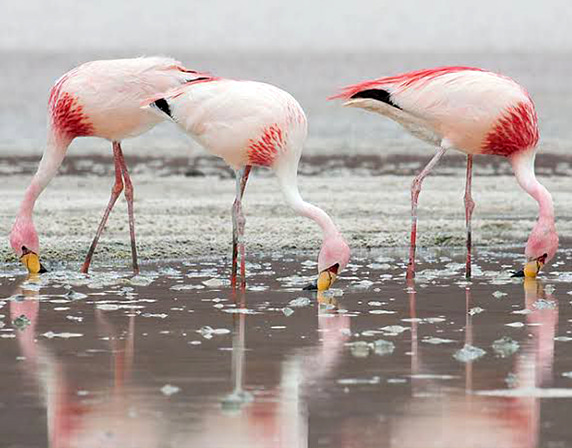
Day 3:After breakfast, a trip to the Ballestas Islands for typical birds such as the Humboldt Penguin, Inca tern and Peruvian Booby. In the afternoon, a visit to the mudflats of Paracas bay to see the many wading birds including flamingoes. Return to your hotel.
Meals: B
Day 4:Return to Lima and then onto Lomas de Lachay, just north of the capital. A small reserve but nevertheless an important habitat for several important species, such as the endemic Raimondi's Yellow-finch and the thick-billed Miner. Return to Lima and your hotel.
Day 5:Transfer to the airport for the flight to Puerto Maldonado. Reception at the airport and transfer by canoe to the jungle lodge. Packed lunch on the canoe. Travelling through virgin rainforest, you will eventually reach the lodge in pristine primary rainforest. An introductory walk into the forest behind the lodge which is dominated by giant Brazil-nut and Dipteryx trees. Frequently seen mammals on the trail are Saddle-back Tamarins, Brown Capuchins and Agoutis as well as Toucans. Return for dinner.
Meals: D
Day 6:Trip to the Macaw Clay-lick (Colpa) by canoe, continuing a further 4 hours upriver, deep within the National Reserve where the actual Collpa is situated. After lunch a guided exploration of the the trail system in the area. Camp on a beach near the Collpa.
Meals: L
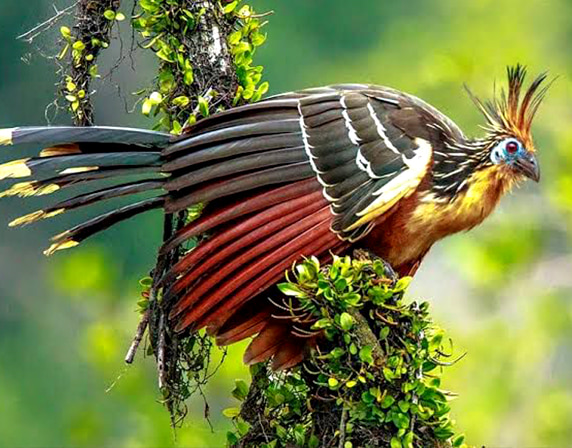
Day 7:A pre-dawn start is needed to get to the clay-lick before the birds. They arrive in search of minerals and salts and the digestive properties of the clay. On average, several hundred macaws and smaller parrots visit the clay-lick daily, including Scarlet, Blue and Yellow, Red and Green, Chestnut-fronted and Blue-headed parrots, among others. This clay-lick is considered to be one of the largest in the world. A late morning hike followed by lunch, where many species of bird abound especially Rufescent Tiger-herons, Great Egrets, Wattled Jacanas, Hoatzin and Donacobius. Return down river to the lodge.
Day 8:A dawn start is required for the canoe trip back to Puerto Maldonado with fabulous views of the sunrise over the river. Opportunity for early morning wildlife observation which is particularly active at this time. Howler monkeys are frequently heard, and your guide will assist in your arrival in Puerto Maldonado. Transfer to the airport for the return flight back to Cuzco. Transfer to your hotel.
Day 9:After breakfast, we will travel through the spectacular eastern ranges of the Andes to the village of Paucartambo. We then ascend to the last pass overlooking the Amazon Basin and begin the breathtaking descent from 3500m to 1600m to your comfortable lodge in the orchid laden Cloud Forests. In the late afternoon, we will walk into the lodge to the sounds of Quetzals, Trogons and Gray-breasted Wood-wrens. Night at the Lodge.
Meals: B
Day 10:Pre- breakfast walk to a nearby spot in the Cloud Forest where the strange and beautiful Cocks-of-the-Rock display at dawn. A wonderful sight as up to 25 bright red-orange males dance and sing attempting to attract the the duller, burgundy colored females. After visiting this lek we return to the Lodge for breakfast and continue to the Madre de Dios River and journey down the river. Past the last folds of the Andes, and at it's confluence with the Manu River, we will arrive at Boca Manu. Night's accommodation.
Meals: P-B
Day 11:Today we enter the clay laden waters of the Manu River, with a brief stop at the park ranger station at Limonal to present our permits. We then travel for about five hours up the Manu river. Beaches, especially in the dry season, are loaded with nesting birds and feeding Herons, Egrets, Orinoco Geese, Terns and Skimmers to name but a few. Some beaches will host sunning white and black caimans and breeding side-necked Turtles. Hundreds of sand-colored Nightjars roost during the day on logs and beaches. After lunch by the river we arrive at our camp near the lake of Cocha Salvador. We'll have the afternoon to explore some of the trails through the pristine rainforest. A visit to the lake of Cocha Otorongo is planned, where observation piers and a 20 meter observation tower in the rainforest canopy overlooking the lake are available. Night at Cocha Salvador tented camp.
Day 12:After breakfast, time will be spent at the lake of Cocha Salvador. We may encounter an Agami Heron or a Sungrebe as well as brown Cappuchin monkeys. The guide will explain some of the basics of rainforest ecosystems. We may cross paths with a group of Peccaries - a species of wild boar found here. Night at Cocha Salvador Tented Camp.
Meals: B
Day 13:Return journey back for around 4-5 hours through the forest to Cocha Otorongo. We'll be met at the river by the cook for a picnic lunch and then board the motorized dugouts for the 4 hour trip down river to Boca Manu for the night. The river trip again will be a wonderful opportunity for birding and other wildlife observation. Night in the lodge at Boca Manu.
Day 14:Explore the small trail system at the lodge before heading across the river to the tiny airstrip of Boca Manu. On arrival at the strip we board the aircraft for the 35 minute flight to Cusco. Firstly flying over the seemingly endless rainforest and then past snow peaks and mountains returning to Cuzco. Return to your hotel.
Day 15:Transfer to the airport for the return flight back to Lima. Journey to Marcapomacocha, an area of high altitude birding (4500m). Camp for the night.
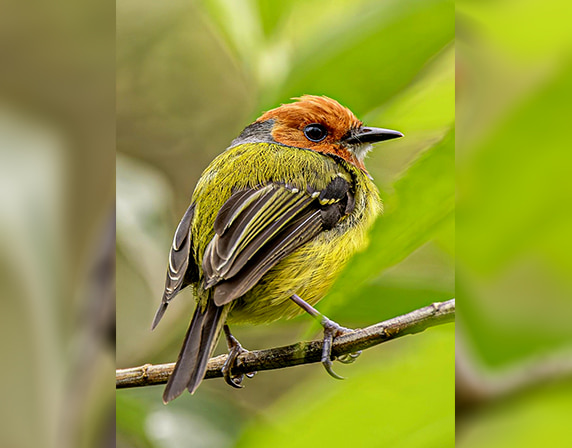
Day 16:Full day birding around the lake. Firstly, we may see the rare, high altitude Diademed Sandpiper as well as the White-Bellied Cincloides, a very rare furnarid. We may also see the Giant Coot and the Black-breasted Hillstar, a hummingbird endemic to Peru. Return to Lima and accommodation at your hotel.
Day 17:Last day to relax and/or reminisce on the wonderful birding memories of the past two weeks. Transfer to the airport for the return flight home.
We are also able to offer several birdwatching programmes in the Pacaya Samiria National Reserve and the Allpahuayo - Mishana Reserve Zone in Northern Peru - Contact us for further information End of our services.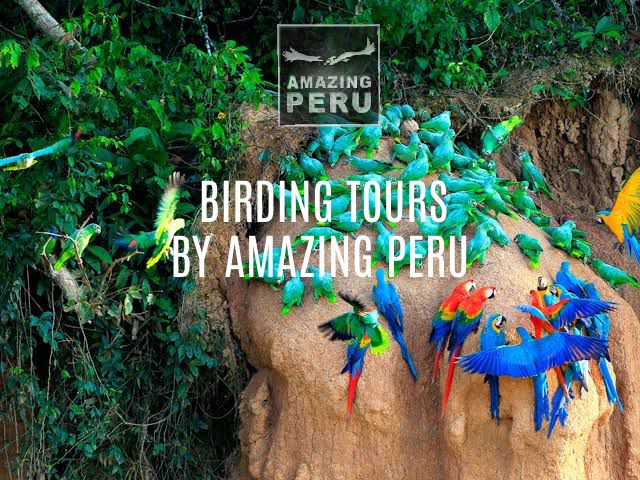
 Please Contact Us Here


Who needs hiking when you can fly? The company Amazing Peruoffers hour-long flight tours right over the Sacred Valley of the Incas. The plane fits a minimum of eight passengers, and it can also be chartered. Passengers fly over Tipon and Pikillaqta, both archaeological sites, Pisaq and the Urubamba Valley, Sacsayhuaman, and, of course, Machu Picchu itself. Flights can be longer or shorter as requested. "
"You can Om your way through Machu Picchu
Machu Picchu is known as one of the most spiritual lands in the world, so why not go all out and Om your way through its ruins? Amazing Peru offers a seven-day yoga tour where visitors travel from Lima to Cuzco and finally to Machu Picchu, where they stay in the famed sanctuary Lodge hotel right outside of the ruins. They participate in multiple meditation and yoga sessions throughout the trip, but the highlight is a private session smack-dab in the middle of the ruins. Now that is an Om experience worth waiting for."

Wellness & Health Travel and Tours
A round Peru and Latin America tours specifically created for those who need to recharge their physical and mental energies. A nurturing and enlivening...
Private Jet Charters in Peru and Latin America (View here)

- Christmas in Galapagos & Ecuador Travel
- 2026-27 Christmas in Galapagos & Peru New Year Tour
- 2026-27 Christmas in Galapagos & New Year's in Brazil
- Christmas in Peru and Machu Picchu 2026/2027 - View all
- Christmas Brazil Amazon Cruise
- Christmas Vacations in Costa Rica
- Christmas and New Year in Ecuador & Galapagos Islands
- Christmas and New Year in Chile
- Christmas Vacations in Argentina
- 2026 Christmas Peru and Galapagos Tour
- 2026 Christmas Peru and New Year's Galapagos Tour
- Mexico Christmas and New Year
- New Year's in Peru 2026/2027
- New Year's in Brazil
- Christmas Brazil Tour: Iguazu Falls, Amazon River Cruise from Manaus
- Christmas and New Year's in Latin America 2026/2027
- Brazil & Peru Christmas Highlights Tour - 15 days
- Christmas in Antarctica
- Christmas in the Sun & Beaches
- Winter Christmas & Ski Holidays
- Christmas Cruises
- New Year Getaways




Incl. Miraflores Park, Monasterio & Sanctuary Lodge Hotels, all trains, all private tours, finest service guaranteed





Adan
USA
11th November 2026

Theresa W.
SINGAPORE
9th November 2026

- Ultra Luxury-Luxury Retreat Collection
- Luxury Travel Peru
- Luxury Travel Argentina
- Luxury Travel Brazil
- Luxury Travel Chile
- Luxury Caribbean Trips
- Luxury Travel Galapagos
- Luxury Travel Ecuador
- Luxury Travel Machu Picchu
- Luxury Travel Patagonia
- Luxury Travel Iguassu Falls
- Luxury Travel Mexico
- Luxury Travel Guyana
- Luxury Travel Costa Rica
- Luxury Travel Antarctica
- Luxury Travel Panama
- Luxury Travel Peru & Brazil
- Luxury Travel Peru & ecuador
- Luxury Travel Peru & Costa Rica
- Luxury Travel Peru & Mexico
- Luxury Travel Cuba


Free Cuzco & Machu Picchu Travel Guide
Cusco Tours & Travel Packages
Trekking Tours around Cusco
Cusco Hotels
Cusco Restaurants
Cusco Churches
Cusco Museums
Cusco Archeological sites
About Cusco History
Cusco Food and Drink
Sacred Valley of the Incas
Watch our Inca Trail - Videos here
Watch our Gourmet Tour - Video here
- Peru tours, travel & vacations
- Galapagos tours & cruises
- Ecuador tours, travel & vacations
- Chile tours, travel & vacations
- Brazil tours, travel & vacations
- Bolivia tours, travel & vacations
- Argentina tours, travel & vacations
- Surinam tours, travel & vacations
- Venezuela tours, travel & vacations
- Mexico tours, travel & vacations
- Honduras tours, travel & vacations
- Costa Rica tours, travel & vacations
- Cuba tours, travel & vacations
- Panama tours, travel & vacations
- Paraguay tours, travel & vacations
- Tahiti tours, travel & vacations
- Guyana tours, travel & vacations
- Bora Bora tours, travel & vacations
- Antarctica tours, travel & vacations
- Luxury Caribbean tours, travel & vacations

Private jet & helicopter charters throughout Peru and Latin America.

AMAZING PHILANTHROPY
Helping children in one of Peru's poorest village schools supporting hands-on initiatives such as implementation of classrooms to ensuring the robust education, health, and well-being of young children

AMAZING PHILANTHROPY
As part of our philanthropic projects we support the older community to promote sporting and social events in the lesser known regions of Peru.




Honoured to include to distinguished clients by providing jet services and luxury travel in Peru and Latin America
- Robert De Niro Hollywood Actor, Producer & Director
- Zygmunt Solorz-Żak Businessman Forbes Top 100 World's Billionaire
- Diana Raab American Author • Poet • Lecturer Educator and Inspirational Speake
For more information to join our Hiram Bingham Club visit The Hiram Bingham Club © by Amazing Peru:
The Hiram Bingham Club is an exclusive circle of our most passionate & loyal guests - like-minded individuals who want to experience the highest standard in authentic ultra-luxury travel. We have the World’s Most Exclusive Experiences. Venture Beyond the Extraordinary.
