
















 Share
Share
7 days / 6 nights.
Upon arrival from Lima or Cuzco, reception and transfer to our office in Puerto Maldonado. Puerto Maldonado is situated at the confluence of the mighty Madre de Dios and Tambopata Rivers and is a bustling, booming tropical frontier town. Its principal activities are gold mining, Brazil nut collecting, timber extraction, agriculture and ecotourism. After a brief survey of the town we will drive thirty minutes to the Tambopata river port in the community of Infierno. We will board our boats for a one hour trip by motorized canoe to Posada Amazonas. Depending on the arrival time of the plane we will have a boxed lunch aboard the boats or have lunch upon arrival at Posada Amazonas. During our voyage we may see bird species typical of the river or forest edge such as: Black Skimmer, Pied Lapwing, Capped Heron, Jabiru Stork, Roadside Hawk, and several species of kingfishers, swallows and flycatchers.
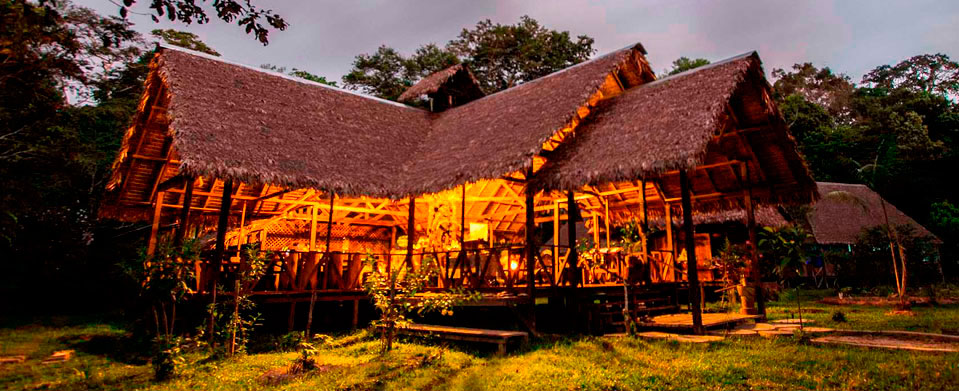
When we arrive at Posada Amazonas we will unpack and unwind. Posada Amazonas is a comfortable yet unobtrusive 30 room lodge owned jointly by Rainforest Expeditions and the Local Community of Infierno. We will receive a short orientation and a complete briefing on the lodge and the Ecotourism Project before our afternoon activity : the canopy tower. In this activity, we will visit a 35 meter scaffolding tower that is 15 minutes walking from the lodge.
The scaffolding tower is built so that you safely climb using the internal staircase with verandahs on each side, and rest in platforms present every 2 meters. From the top you not only get spectacular views of the river and the surrounding forest but also excellent opportunities to observe birds from the canopy including parrots, toucans and macaws. A video about the forest of Tambopata will be displayed after dinner.
Meals: L & D
Day 2: Posada Amazonas-Tambopata Research CenterWe will be up at dawn for a visit to the Tres Chimbadas oxbow lake. After an early breakfast we depart, fifteen minutes from Posada Amazonas by boat and a 30 minute walk take us to the lake shore. From here we take a long, easy canoe ride around it. We will look for giant river otters, turtles, hoatzin, and wading birds. The giant river otters that are seen in Tres Chimbadas belong to a resident family of nine. As we approach noon, animal activity decreases, and we will continue travel up the Tambopata River for 5 to 6 hours into the pristine heart of the reserve. After the first hour we will leave the final traces of human habitation behind as we cross the northern boundary of the 700,000 hectare, completely uninhabited nucleus of the Tambopata National Reserve.
Differences in wildlife abundance will be noted immediately: we will begin to sight macaws, herons, kingfishers and cormorants frequently and improve our chances of encounters with capybaras, caiman, storks, ducks and other wildlife. Boxed lunch on the boat. We will arrive at Tambopata Research Center in the early afternoon, being greeted by the Chicos, our flock of semi-wild, rescued macaws. On arrival, we will hold an orientation session. After this we will hike the 1.5 mile Bamboo Trail, a trail that is famous for the abundance of rare birds that live exclusively in this habitat and are endemic to southern Peru.
It is also the home of the frequently found Howler and Dusky titi monkeys. As we birdwatch our way through the trail we will end our hike at the overlooks which are good places to observe canopy birds like tanagers, jacamars, elaenias, guans, and oropendolas. We will return to TRC for dinner. After dinner, to cap off a fulfilling day we can have a frog walk through the forest, allowing the photo lovers to take beautiful macro shoots of american bullfrogs, horned frogs, tree frogs and an incredible variety of colorful insects.
Meals: B, L & D
Day 3: Tambopata Research CenterAt dawn we will cross the river and enjoy the world's largest macaw clay lick where hundreds of parrots and macaws of up to 15 species congregate daily. The January 1994 issue of National Geographic features an article on Tambopata Research Center and the Tambopata Macaw Project. It begins with a description of the daily spectacle at the clay lick:
" When the morning sun clears the Amazon tree line in southeastern Peru and strikes a gray-pink clay bank on the upper Tambopata River, one of the world's most dazzling wildlife gatherings is nearing its riotous peak. The steep bank has become a pulsing, 130-foot-high palette of red, blue, yellow and green as more than a thousand parrots squabble over choice perches to grab a beakful of clay, a vital but mysterious part of their diet. More than a dozen parrot species will visit the clay lick throughout the day, but this midmorning crush belongs to the giants of the parrot world, the macaws."
You can expect to see ten to twelve of the following members of the parrot family: Red-and-green, Blue-and-gold, Scarlet, Red-bellied, Chestnut-fronted and Blue-headed Macaws; Mealy and Yellow-crowned Amazons; Blue-headed, Orange-cheeked and White-bellied Parrots; Dusky-headed, White-eyed, Cobalt-winged and Tui Parakeets and Dusky-billed Parrotlets. This show will continue until the macaws sense danger, usually in the form of an eagle, and depart simultaneously in an explosion of sound and color. Around mid-morning, when the most intense clay lick activity is over for the day, we will return to TRC for breakfast..
After breakfast we will hike the 1.5 mile Ocelot Trail, a trail which exemplifies the quintessential rainforest . Although at this time of day mammals and birds are not as active as in the early morning, we will concentrate on the forest itself and discuss general rain forest ecology.
This forest, which is estimated to be 200 to 300 years old and includes truly huge Ceiba trees and Strangler figs is home to several mammals that are occasionally encountered: Saddleback tamarins, Squirrel and Brown Capuchin Monkeys and Collared peccary. This trail is the one which most often sports ocelot, puma and jaguar tracks, although any one of these three large cats is extremely difficult to spot. We will return to TRC for lunch and then embark on a 2 mile hike to the palm swamp, a nesting colony and preferred roost for Blue and Gold and Red-bellied Macaws. Although there are different degrees of macaw activity at the swamp year round, the most exciting time to visit it is from October to March, during the nesting season, when macaws will land on the nests and stand there for several minutes, interacting with other individuals at less then 20 feet from our observation tower. The scenes at the swamp, especially with late afternoon sun in our backs, make prized photo opportunities. After a lazy afternoon with the macaws we will hike back to the lodge for dinner.
Meals: B, L & D
Day 4: Tambopata Research CenterAfter our second visit to the macaw clay lick at dawn we will have breakfast. Then we will embark on a hike of the Toucan Trail that visits terra firme forests. We will visit beautiful pristine creeks that wind their way through forested hills, in some cases following dry stream beds. The community of birds and other wildlife that lives in the hilly terra firme, is very different from that of the bamboo or mature floodplain. After a long, easy hike, we will return to the lodge for lunch. After lunch we will take a short five minute boat ride to a small, drying oxbow lake where we will spend the afternoon on a platform in the middle of the pond observing some of its birdlife, which may include hoatzin, duck, ibis, woodpeckers, chachalaca, parakeets, oropendolas and numerous flycatcher species. We will return to TRC for dinner and an optional second night outing.
Meals: B, L & D
Day 5: Tambopata Research CenterWe will wake up at dawn once again to visit the macaw clay lick and then return for breakfast. The rest of the morning will be spent walking a trail that passes through seasonally flooded forest, allowing us excellent opportunities to see wading birds and even mammals that look for this precious bodies of water to quench their thirst. This trail also reports excellent opportunities to spot howler monkeys and mixed flocks of birds. After lunch we will spend the afternoon in a challenging outing: we will travel upriver for 10 minutes, after what a five minute walk takes us to a small stream that feeds the Tambopata river. At this stream we will find a canoe, in which we will be able to paddle silently through the stream, and try our luck at fishing. For the fish lovers, the most common species at this kind of body of water is the piranha. Dinner and overnight at TRC.
Meals: B, L & D
Day 6: Tambopata Research Center - Posada AmazonasWe will wake up at dawn once again to visit the macaw clay lick and then return for breakfast. After breakfast we will take a short hike to our favorite activitiy before packing and saying goodbye to the staff. We will embark to Posada Amazonas, arriving at mid-afternoon. We will spend our last night in the rain forest in this wonderfully designed lodge enjoying its happy hour as we ponder over the exciting happenings of the past few days.
Meals: B
Day 7: Posada Amazonas-Puerto MaldonadoAfter an early breakfast we will return to Puerto Maldonado for our flight back to Lima.
Meals: B
End of our services. Please Contact Us Here


Who needs hiking when you can fly? The company Amazing Peruoffers hour-long flight tours right over the Sacred Valley of the Incas. The plane fits a minimum of eight passengers, and it can also be chartered. Passengers fly over Tipon and Pikillaqta, both archaeological sites, Pisaq and the Urubamba Valley, Sacsayhuaman, and, of course, Machu Picchu itself. Flights can be longer or shorter as requested. "
"You can Om your way through Machu Picchu
Machu Picchu is known as one of the most spiritual lands in the world, so why not go all out and Om your way through its ruins? Amazing Peru offers a seven-day yoga tour where visitors travel from Lima to Cuzco and finally to Machu Picchu, where they stay in the famed sanctuary Lodge hotel right outside of the ruins. They participate in multiple meditation and yoga sessions throughout the trip, but the highlight is a private session smack-dab in the middle of the ruins. Now that is an Om experience worth waiting for."

Wellness & Health Travel and Tours
A round Peru and Latin America tours specifically created for those who need to recharge their physical and mental energies. A nurturing and enlivening...
Private Jet Charters in Peru and Latin America (View here)

- Christmas in Galapagos & Ecuador Travel
- 2026-27 Christmas in Galapagos & Peru New Year Tour
- 2026-27 Christmas in Galapagos & New Year's in Brazil
- Christmas in Peru and Machu Picchu 2026/2027 - View all
- Christmas Brazil Amazon Cruise
- Christmas Vacations in Costa Rica
- Christmas and New Year in Ecuador & Galapagos Islands
- Christmas and New Year in Chile
- Christmas Vacations in Argentina
- 2026 Christmas Peru and Galapagos Tour
- 2026 Christmas Peru and New Year's Galapagos Tour
- Mexico Christmas and New Year
- New Year's in Peru 2026/2027
- New Year's in Brazil
- Christmas Brazil Tour: Iguazu Falls, Amazon River Cruise from Manaus
- Christmas and New Year's in Latin America 2026/2027
- Brazil & Peru Christmas Highlights Tour - 15 days
- Christmas in Antarctica
- Christmas in the Sun & Beaches
- Winter Christmas & Ski Holidays
- Christmas Cruises
- New Year Getaways




Incl. Miraflores Park, Monasterio & Sanctuary Lodge Hotels, all trains, all private tours, finest service guaranteed






Adan
USA
11th November 2026

Theresa W.
SINGAPORE
9th November 2026

- Ultra Luxury-Luxury Retreat Collection
- Luxury Travel Peru
- Luxury Travel Argentina
- Luxury Travel Brazil
- Luxury Travel Chile
- Luxury Caribbean Trips
- Luxury Travel Galapagos
- Luxury Travel Ecuador
- Luxury Travel Machu Picchu
- Luxury Travel Patagonia
- Luxury Travel Iguassu Falls
- Luxury Travel Mexico
- Luxury Travel Guyana
- Luxury Travel Costa Rica
- Luxury Travel Antarctica
- Luxury Travel Panama
- Luxury Travel Peru & Brazil
- Luxury Travel Peru & ecuador
- Luxury Travel Peru & Costa Rica
- Luxury Travel Peru & Mexico
- Luxury Travel Cuba


Free Cuzco & Machu Picchu Travel Guide
Cusco Tours & Travel Packages
Trekking Tours around Cusco
Cusco Hotels
Cusco Restaurants
Cusco Churches
Cusco Museums
Cusco Archeological sites
About Cusco History
Cusco Food and Drink
Sacred Valley of the Incas
Watch our Inca Trail - Videos here
Watch our Gourmet Tour - Video here
- Peru tours, travel & vacations
- Galapagos tours & cruises
- Ecuador tours, travel & vacations
- Chile tours, travel & vacations
- Brazil tours, travel & vacations
- Bolivia tours, travel & vacations
- Argentina tours, travel & vacations
- Surinam tours, travel & vacations
- Venezuela tours, travel & vacations
- Mexico tours, travel & vacations
- Honduras tours, travel & vacations
- Costa Rica tours, travel & vacations
- Cuba tours, travel & vacations
- Panama tours, travel & vacations
- Paraguay tours, travel & vacations
- Tahiti tours, travel & vacations
- Guyana tours, travel & vacations
- Bora Bora tours, travel & vacations
- Antarctica tours, travel & vacations
- Luxury Caribbean tours, travel & vacations

Private jet & helicopter charters throughout Peru and Latin America.

AMAZING PHILANTHROPY
Helping children in one of Peru's poorest village schools supporting hands-on initiatives such as implementation of classrooms to ensuring the robust education, health, and well-being of young children

AMAZING PHILANTHROPY
As part of our philanthropic projects we support the older community to promote sporting and social events in the lesser known regions of Peru.




Honoured to include to distinguished clients by providing jet services and luxury travel in Peru and Latin America
- Robert De Niro Hollywood Actor, Producer & Director
- Zygmunt Solorz-Żak Businessman Forbes Top 100 World's Billionaire
- Diana Raab American Author • Poet • Lecturer Educator and Inspirational Speake
For more information to join our Hiram Bingham Club visit The Hiram Bingham Club © by Amazing Peru:
The Hiram Bingham Club is an exclusive circle of our most passionate & loyal guests - like-minded individuals who want to experience the highest standard in authentic ultra-luxury travel. We have the World’s Most Exclusive Experiences. Venture Beyond the Extraordinary.
