




Peru is without doubt the most fascinating country in South America. Its astonishing cultural heritage and incredible natural diversity is simply unmatched. Thanks to its strategic location, Peru is a privileged destination for tourism and with ancient cultures and a rich colonial tradition, that combines with one of the richest biodiversities on Earth.
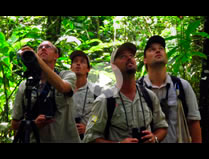
Peru's outstanding variety of climates and eco-systems places the country amongst the world's top eight nations in terms of biodiversity, where of the 104 life zones that exist on the planet, Peru is home to 84. With more than 400 species of mammals, 300 species of reptiles, 1,700 species of birds and more than 50,000 plants registered to date, Peru is a remarkable destination for all who are interested in the natural world.
In addition to Peru's staggering biodiversity,
visitors can spend weeks touring the fascinating coastal deserts
that extend along the whole of the west coast, or visit numerous
colonial cities home to a wonderful display of colonial architecture.
Adventure-lovers will also find Peru, with the Andes running
across the entire length of the country, ideal for trekking,
camping and mountain climbing. The highlands are riddled with
more than 15,000 lakes, snow-capped peaks soaring over 6,000
meters, the world's deepest canyons and picturesque villages.
The entire Andean chain offers unparalleled opportunities
for white-water rafting along with superb trails for mountain
biking.
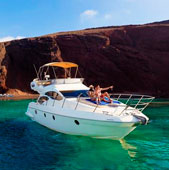
The beaches of Paracas (south of Lima) and along the north
coast (Huanchaco, Máncora, Punta Sal) are ideal for
surfing, windsurfing, sand boarding, fishing and scuba diving.
There are also superb opportunities for fishing in the Amazon.
With more than 50 protected natural areas along the coastline, Andean foothills, wetlands, Amazonian forest and tropical highlands, including Paracas, Manu, Tambopata-Candamo, Pacaya-Samiria and Pampa Galeras, a vast array of eco-systems are a haven for dozens of species on the verge of extinction. Peru will also lead visitors into a world of art and culture with a legacy of numerous pre-hispanic civilisations such as the Quechua, Aymara, Mochica and Nazca cultures, whose views of the world were based on their observation of both the heavens and nature. Over the course of centuries, Peru has also incorporated cultural influences from European, particularly Spanish along with African and Asian migrants.
A diverse nation featuring many cultures, Peru with its historical, archaeological and architectural legacies, is also famous for more than 1,500 musical genres, combining instruments from the outside world with native Andean equivalents, such as the quena and zampoña flutes. All of which provide the accompanying music to more than 3,000 festivals such as the Candelaria, Inti Raymi, Carnivals, Corpus Christi and Easter Week. Not forgoing the table, Peru boasts one of the most exquisite and varied cuisines on Earth, as local chefs have succeeded in adapting a diverse variety of native ingredients while remaining open to outside influence. Peru's cooking is an invitation to discover exotic flavours and fragrant aromas, which are as authentic as they are ancient, from Pacha Manca prepared today just as it was hundreds of years ago to cuy, the guinea pig that has been a domesticated food source for over 10,000 years.
The first Pan-Andean civilisation of Chavín
(1500-400 BC), with numerous stone temples riddled with labyrinthine
galleries at altitudes over 3,100m to the mysterious mud-brick
citadels and pyramids built near the sea by the Mochica dynasty
(200 BC-700 AD); to the royal tombs of the Lord of Sipan,
laden with hoardes of golden treasure, have all contributed
to the most important archaeological discoveries of the twentieth
century.
Following in the footsteps of the fierce Chachapoyas warriors
(1000-1400 AC) along their 25-metre-high ramparts in the Kuelap
fortress in Amazonas or strolling around Cuzco, the capital
of the Inca empire (1300-1500 AC), visitors are faced with
an incredible choice of the most significant cultural legacies
in South America. As the Incas were the greatest pre-Colombian
civilisation in South America, Cuzco and its environs feature
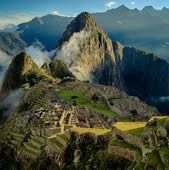
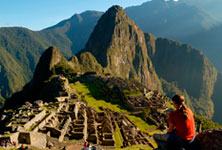
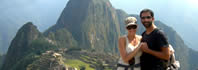
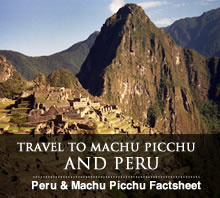
colossal constructions such as the Machu Picchu citadel, hailed
as the eighth wonder of the world.
Witness this staggering combination of cultures along with
prosperous cities founded during the colonial era, with their
churches, convents, monasteries and aristocratic mansions;
Peru is indeed a showcase of architecture and art from a bygone
era.
There are few countries on Earth that can match Peru in offering such a variety of significant cultural and ethnic backgrounds to one of the most diverse and complex geographies on Earth. This characteristic gave rise in Peru to some of the world's greatest ancient civilizations, and is what makes Peru today a fascinating country for visitors from around the world.
| Peru Factsheet | Manu Factsheet |
| Iquitos Factsheet | Tambopata Factsheet |

Wellness & Health Travel and Tours
A round Peru and Latin America tours specifically created for those who need to recharge their physical and mental energies. A nurturing and enlivening...
Private Jet Charters in Peru and Latin America (View here)

- Christmas in Galapagos & Ecuador Travel
- 2026-27 Christmas in Galapagos & Peru New Year Tour
- 2026-27 Christmas in Galapagos & New Year's in Brazil
- Christmas in Peru and Machu Picchu 2026/2027 - View all
- Christmas Brazil Amazon Cruise
- Christmas Vacations in Costa Rica
- Christmas and New Year in Ecuador & Galapagos Islands
- Christmas and New Year in Chile
- Christmas Vacations in Argentina
- 2026 Christmas Peru and Galapagos Tour
- 2026 Christmas Peru and New Year's Galapagos Tour
- Mexico Christmas and New Year
- New Year's in Peru 2026/2027
- New Year's in Brazil
- Christmas Brazil Tour: Iguazu Falls, Amazon River Cruise from Manaus
- Christmas and New Year's in Latin America 2026/2027
- Brazil & Peru Christmas Highlights Tour - 15 days
- Christmas in Antarctica
- Christmas in the Sun & Beaches
- Winter Christmas & Ski Holidays
- Christmas Cruises
- New Year Getaways

Incl. Miraflores Park, Monasterio & Sanctuary Lodge Hotels, all trains, all private tours, finest service guaranteed




Adan
USA
11th November 2026

Theresa W.
SINGAPORE
9th November 2026

- Ultra Luxury-Luxury Retreat Collection
- Luxury Travel Peru
- Luxury Travel Argentina
- Luxury Travel Brazil
- Luxury Travel Chile
- Luxury Caribbean Trips
- Luxury Travel Galapagos
- Luxury Travel Ecuador
- Luxury Travel Machu Picchu
- Luxury Travel Patagonia
- Luxury Travel Iguassu Falls
- Luxury Travel Mexico
- Luxury Travel Guyana
- Luxury Travel Costa Rica
- Luxury Travel Antarctica
- Luxury Travel Panama
- Luxury Travel Peru & Brazil
- Luxury Travel Peru & ecuador
- Luxury Travel Peru & Costa Rica
- Luxury Travel Peru & Mexico
- Luxury Travel Cuba

Free Cuzco & Machu Picchu Travel Guide
Cusco Tours & Travel Packages
Trekking Tours around Cusco
Cusco Hotels
Cusco Restaurants
Cusco Churches
Cusco Museums
Cusco Archeological sites
About Cusco History
Cusco Food and Drink
Sacred Valley of the Incas
Watch our Inca Trail - Videos here
Watch our Gourmet Tour - Video here
- Peru tours, travel & vacations
- Galapagos tours & cruises
- Ecuador tours, travel & vacations
- Chile tours, travel & vacations
- Brazil tours, travel & vacations
- Bolivia tours, travel & vacations
- Argentina tours, travel & vacations
- Surinam tours, travel & vacations
- Venezuela tours, travel & vacations
- Mexico tours, travel & vacations
- Honduras tours, travel & vacations
- Costa Rica tours, travel & vacations
- Cuba tours, travel & vacations
- Panama tours, travel & vacations
- Paraguay tours, travel & vacations
- Tahiti tours, travel & vacations
- Guyana tours, travel & vacations
- Bora Bora tours, travel & vacations
- Antarctica tours, travel & vacations
- Luxury Caribbean tours, travel & vacations

Private jet & helicopter charters throughout Peru and Latin America.

AMAZING PHILANTHROPY
Helping children in one of Peru's poorest village schools supporting hands-on initiatives such as implementation of classrooms to ensuring the robust education, health, and well-being of young children

AMAZING PHILANTHROPY
As part of our philanthropic projects we support the older community to promote sporting and social events in the lesser known regions of Peru.




Honoured to include to distinguished clients by providing jet services and luxury travel in Peru and Latin America
- Robert De Niro Hollywood Actor, Producer & Director
- Zygmunt Solorz-Żak Businessman Forbes Top 100 World's Billionaire
- Diana Raab American Author • Poet • Lecturer Educator and Inspirational Speake
For more information to join our Hiram Bingham Club visit The Hiram Bingham Club © by Amazing Peru:
The Hiram Bingham Club is an exclusive circle of our most passionate & loyal guests - like-minded individuals who want to experience the highest standard in authentic ultra-luxury travel. We have the World’s Most Exclusive Experiences. Venture Beyond the Extraordinary.
