

















 Share
Share
Peru & Machu Picchu Factsheet
Offers an incredible diversity of terrain ranging from snow-capped mountains of the Andes to vast stretches of accessible and inaccessible primary rainforest with a dramatic arid coastal desert. It is most famous for the well-preserved archaeological and cultural remnants of one of the world’s greatcivilisations, the pre-Columbian Incas.
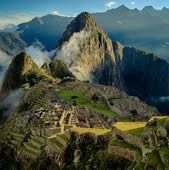
Peru should not only be remembered for Machu Picchu, the renowned "lost city", hidden for centuries and perched on a hilltop in the sub-tropical Andean foothills. Travellers and tourists are drawn to the ruins of other Inca citadels nearby in the beautiful Sacred Valley; and the preserved city of Cuzco, whose colonial structures were built on Inca foundations.
Other cities and destinations throughout Peru are steeped in history such as Trujillo in the north of Peru, Arequipa in the South and Lima, the city of the Kings. The spectacular Colca Canyon, the mesmerizing waters of Lake Titicaca and jungles of the Amazon offer the visitor the opportunity to enjoy a holiday of incomparable variety.
Peru can offer a variety of hotels ranging from simple hostels to 5 star deluxe international hotels; fromjungle lodges with no hot water to camping on its many hikes and trails. The following information has been provided as a guide but Amazing Peru will not be held liable for any errors or omissions and any actions resulting from relying on the below recommendations.
Climate
Weather conditions vary with altitude and geographical location On the coast, summertime is from November to April when it is hot (up to 30oC) and sunny. At other times of the year there is a chilly mist though seldom rain The dry and sunny season in the highlands is from May to October, when it can be cold at night. From December to March it can be cloudy and wet, especially in the afternoon, with temperatures similar to an English spring (18oC) . In the jungle the climate is generally hot and humid (about 30oC) with rainfall at any time of year but especially between the months of November and April. Occasional cold fronts from Argentina can lower the temperature dramatically.
Fiestas and holidays
The principal festivals are associated either with the Catholic calendar, for example Easter week (especially colourful in Ayacucho and Cuzco) and carnival (February). The Inti Raymi Festival of the Sun, celebrating Inca history is a tourist attraction in Sacsayhuaman, Cusco where there is a colourful pageant (June 24). Puno, on the shores of Lake Titcaca has a plethora of festivals throughout the year and is known as the folk-capital of Peru. A less well known festival of the Virgen del Carmen at Paucartambo.
Festive Calendar
2 February - Candlemas - Colourful festivals held throughout the highlands, particularly in the Puno area February to March – Carnival - Especially celebrated in the highlands. One annoyance are water fights and no body is spared from a soaking.
March to April - Semana Santa or Easter Week
June - Corpus Christi, held on the 9th Thursday after Easter. Processions are especially festive in the
Cuzco area.
June 24th - Inti Raymi - The most celebrated Inca festival in the Andes, held in Cuzco. The population triples and hotel availability is very hard to find. Costumes, parades and native dancing fill the streets. There is a wonderful pageant held in Sacsayhuaman that celebrates the winter solstice
July 28th - Independence Day - Peruvians everywhere this holiday seriously. The party lasts for 4 days. Travel and hotels are difficult during this time.
August 30th - Santa Rosa de Lima - Parades fill the streets of Lima.
October 18th - El Senor de los Milagros (Lord of the Miracles) - Celebrated in Lima with parades, with everybody wearing purple.
November 2nd - All Soul’s Day - Celebrated with lots of food and drink commemorating the passing of the country’s forefathers.
November 5th - Puno Day - Lots of dancing and flamboyant costumes mark this holiday’s festivities. The holiday is in honour of Manco Capac, the first Inca to emerge from Lake Titicaca. Currency The official currency is the Nuevo Sol. (3.2/US$ as of 20/01/05) and is divided into 100 centimos. This canbe obtained at the airport upon arrival or the next day in Lima. The US dollar is also worth carrying but in smaller note denominations such as $10, $20 and $50 notes. Both travellers’ cheques and credit cards can easily be used, and if you shop around, you’ll find that the commission charged varies widely. Some Casas de cambio charge no commission to withdraw local currency on your credit card and a small fee to exchange traveller’s cheques while others charge a hefty commission.
Never accept currency that is torn or appears old, as it can be difficult if not impossible to exchange later. Whenever possible, try and keep smaller denominations. You will find this most helpful when bartering in markets as many locals will claim, “no change” when you try and purchase something with a larger bill. Note that excess Soles can be changed into Bolivianos at the Bolivian border at a good rate.
Be sure to know which currency a service is being charged in as dollars and soles are often quoed, leading to much confusion.
Visas
Most European, North American and Australian citizens do not need a visa but up to date information can be found at the Foreign & Commonwealth Office website: http://www.fco.gov.uk/
Health
Medical care is generally good in Lima and usually adequate in other major cities, but it is less soelsewhere.
Urban private health care facilities are often better staffed and equipped than public or rural ones. Public hospital facilities in Cuzco are generally inadequate to handle serious medical conditions. One private facility in Cuzco is adequate for acute care.
Visitors to high-altitude Andean destinations such as Cusco (3400m), Machu Picchu (2400m), or Lake Titicaca (3800m) should discuss the trip with their personal physician prior to arrival. Travel to high altitudes can pose a serious risk of illness, hospitalisation, and even death, particularly if the traveler has a medical condition that affects blood circulation or breathing. Several tourists have died in Peru from medical conditions exacerbated by the high altitude. All people, even healthy and fit persons, will feel symptoms of hypoxia (lack of oxygen) upon arrival at high-altitude. Most people will have increased respiration and increased heart rate. Many people will have headaches, difficulty sleeping, lack of appetite, minor gastric and intestinal upsets, and mood changes. Most people may need time to adjust to the altitude. To help prevent these complications, consider taking acetazolamide (Diamox) after consulting your personal physician, avoid alcohol and smoking for at least one week after arrival at high altitudes, and limit physical activity for the first 36 to 48 hours after arrival at high altitudes.
Vaccinations
Recommended though not compulsory vaccinations are Hepatitis A and B; Rabies; Yellow Fever; Typhoid; tetanus-diphtheria and measles. Travelers to the Amazonas, Loreto, Ucayali and San Martin departments are recommended to take antimalarial
Medication
Travelers who visit the city of Lima or the highland areas of Cuzco, Machu Picchu, Lake Titicaca, Arequipa, Puerto Maldonado, Tambopata are not at risk for malaria.
See www.masta.org for up-to-date health advice for travellers.
Best time to go
Peru is a fascinating country in that it has four distinct geographical regions. Not many countries can offer beaches, mountains, rainforests and deserts all in on one visit. Because of these distinct regions, there really is no best time to travel which is why we offer tours all year-round.
June to August are considered the driest months in the highlands or Amazon basin and are the best if you would like to visit these places or would like to go trekking or climbing. However, even during the rainy season in the Amazon, the rains fall only for a few hours at a time. In the Andes, the rainy season can sometimes just mean a bit of overcast weather. The advantage of traveling at this time is that many other travellers make the mistake of postponing their plans until the dry season, leaving you with more of Peru to yourself.
The best time to visit the mysterious Nazca Lines or the coastal areas is from December to April. In theend, just pick a date that works best for your schedule.
Upon arrival
Most flights arrive quite late in the evening, or early in the morning. Once you've reclaimed your baggage and cleared customs, you will see our unmistakable board in the arrivals lounge with your names clearly marked. Our friendly staff will warmly welcome you to Peru, assist you with your luggage and take you to your hotel by private air-conditioned minivan/bus. Please do not leave the airport terminal building unless you have made contact with Amazing Peru staff. Also ignore the calls from taxi drivers as your private transport has been provided for you.
Food and drink
Drink only bottled water. Pasteurised milk is widely available. Avoid dairy products that are likely to have been made from unboiled milk. Avoid street food vendors and the cheaper restaurants.
What to eat
To try some typical foods, here is a selection of what we recommend.
Cuy - or guinea pig, a delicacy in the highlands.
Lomo Saltado – A stir-fried beef dish with onions, ginger, chili, tomatoes and fried potatoes, served with rice.
Papas Rellenas - Stuffed baked potatoes found in the highland regions.
Ceviche - Along the coastal areas. Can be made with all types of seafood or sea bass. The most typical dish of Peru.
Palta Rellena - Avocado stuffed with chicken salad.
Choclo con queso - Corn on the cob with cheese.
Caucau - A stew made with tripe, potatoes, peppers and parsley popular in the Colca Canyon region.
Rocoto Relleno – Pepper stuffed with beef and vegetables.
Cocada al horno – Sweet dish made with coconut, egg yolk, sesame seeds, wine and butter.
Picarones - Cassava flour fritters made with eggs and deep fried, served in honey.
Tejas - A sugar candy wrapped in waxed paper.
What to drink
Inca Cola - A soda pop that tastes life fizzy bubble gum or cream soda.
Pisco Sour – The drink of Peru. Made with white grape brandy and served with whipped egg white.
Mate de coca – A tea made from coca leaves and proven to help with altitude sickness.
Beer - Cuzqueña and Arequipeña – Excellent beers available in white and malta (black) varieties.
Guinda - A sweet cherry brandy.
Highlights
Cuzco, the Sacred Valley and Machu Picchu
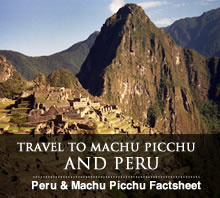
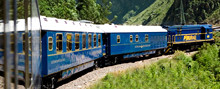
The main reason for a visit to Peru is to see for oneself the sheer majesty of the ruins at Machu Picchu - preserved on their isolated mountain-top site above the waters of the sacred Urubamba River. The site is only a few hours by train from Cuzco, the ancient capital of the Inca empire. A colonial city with countless churches and museums on its cobbled streets and leafy squares. Linking Cuzco and Machu Picchu is the Sacred Valley of the Incas - the larder of the Inca culture - where temples, villages and fortresses delight the visitor.
You will be issued a personal Tourist ticket which is valid for 10 days from the date of your arrival. The ticket allows a once only entrance into several museums, churches and cathedrals in and around Cuzco. These include Santo Domingo, Koricancha, San Blas, Santa Catalina, the Historical Museum, the Religious Art Museum, Sacsayhuaman, Q'enko, Puca Pucara, Tambo Machay, Pisac, Chinchero, Ollantaytambo and Pikilacta.
The Cuzco Cathedral was begun in 1559 and took over 100 years to complete. It is Cuzco's main ornate church.
La Compañia
- Is Cuzco's second most important church, and is often lit up at night and can be seen from the train as you arrive in the city after dark from Machu Picchu.
The walls of Cuzco - are world famous for their construction. Just walk southeast, away from the Plaza de Armas and along the narrow alley of Loreto and you will see these Inca walls on both sides. It's simply amazing to see these stones cut and ground to fit perfectly
Plaza de San Blas
- the best area in the city centre to buy local handicrafts Sacsayhuaman, Qenko, Puca Pucara and Tambo Machay - All archeological sites found around Cuzco, they can be visited on day excursions.
Pisac -
Located about 32 km from Cuzco, Pisac is noted for its bustling Sunday market where traditionally dressed locals travel from miles around to sell their products. Tuesday and Thursday are also market days, although the, market is much smaller. Aside from the market activity, there is also many excellent little bakeries.
Puno & Lake Titicaca
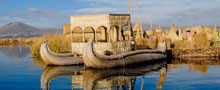
Lake Titicaca is the highest navigable lake in the world. Located in a haunting landscape, rich in birdlife and with interesting pre-inca cultures. This includes the Uros Indians who live on their floating reed islands, and the Aymara people of Taquile Island.
Peruvian Amazon
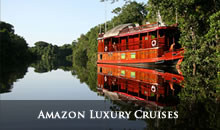
There are two readily accessible areas of Amazonian rainforest where a series of simple lodges have been established to give visitors a taste of life in the jungle. In the north of the country, around the city of Iquitos you can visit the Amazon River and maybe even take a river cruise. In the south there is the Tambopata Candamo near the town of Puerto Maldonado, close to Cuzco.
Manu National Park is harder to access but is a very rewarding rainforest destination albeit an expensive destination choice.
Arequipa and the Colca Canyon
A visit to the beautifully maintained colonial "white city" of Arequipa in the south is often combined with a trip to the Colca Canyon (now also accessible by a new road from Puno). Until quite recently it was isolated from the outside world. Its villagers cultivate an impressively engineered series of terraces and still wear the intricate embroidered costumes of centuries ago. The canyon is the second deepest in the world and the sight of condors spiralling up its cliffs is an incredible sight. Incidentally the deepest canyon in the world, only recently confirmed by NASA, is the Cotahuasi Canyon only a few kilometres away.
Lima
Peru's Pacific coast capital is a huge cosmopolitan city, with pleasant suburbs and landscaped cliff-top parks with a colonial centre that has been declared a UNESCO world heritage site. With several first-class hotels and hostels to choose from, Miraflores is the safest and touristic centre of Lima. Miraflores.
Parque Salazar
Overlooks the bay and is a good place to visit during the summer months when concerts are held.
Larco Mar
Shopping and entertainment complex overlooking the ocean. Restaurants, cinemas, shops etc.
Parque Kennedy
- A great place to wander through the arts and crafts markets that open from Thursday to Sunday. Excellent restaurants close by.
Lima Beaches
Very popular between December and April. Even though they have been declared unsafe for swimming, the city's beaches have become a cultural hub for Limeños who swarm to the area.
Central Lima
Plaza de Armas -
Declared a World Heritage site by UNESCO, this plaza is lined on both sides with arcades and shops. In the centre of the plaza is a bronze fountain dating back to 1650.
The Palacio de Gobierno (Government Plaza) - found on the north side of the Plaza, the Palacio de Gobierno is thought to have been built by Pizarro. Rebuilt in 1937. Guided tours begin at 11:00 and feature the changing of the guard.
The Cathedral houses the remains of Francisco Pizarro.
Plaza Bolivar
Believed to be where General Jose de San Martin proclaimed Peru's independence. At the centre, you will find an equestrian statue of the mounted liberator Palacio Torre Tagle - now the home of the Foreign Ministry.
San Francisco church and monastery
Is famous for its remarkable library and artwork. However the catacombs beneath the church are the tomb of up to 70,000 skeletons.
Museo de la Nación - Located at Javier Rado Oeste 2466, San Borja, and is the best museum to get an overview of all Peruvian archaeology. You can see Chavin stone carvings, Nazca ceramics and Paracas weavings.
Museo de Oro del Peru
- Located at Alonso de Molina 100, Monterrico is also worth a visit. It has two distinct sections. The Gold Museum is housed in the basement vault, and there are thousands of gold pieces to view. The Arms Museum is at the top and is reputed to be one of the world's best, featuring firearms from Peru but also from all over the world.
Hotels
All the hotels we recommend are clean, well located and comfortable hotels varying in services as according to their category. We rarely use hostels as the price difference is negligible between a good hostel and a hotel.
In places like Nazca and Pisco, we do work with some very good hostels. It is important to remember that Peru is a third world country and three star hotels here will not necessarily be the same as three star hotels in Europe or the US. We do endeavour to choose the best hotels in line with your budget. There are five star deluxe hotels we offer that are among the best hotels in the world. We will always quote you with good hotels on all our programmes but upgrades or downgrades will be available as per your request. However, as the price will decrease with downgrades, this will ultimately reflect in the services and standards of the hotel.
Flights
Unless otherwise stated, we provide all internal flights in your programme, excluding the airport taxes. We also provide international flights around South America and can quote, upon request, your international flight to Peru. We work directly with the best airlines in South America but are not responsible for any changes in flight schedules or cancellations made by the airlines. This is the responsibility of the airline in question. We will always endeavour to minimise any delays or changes but cannot guarantee a successful outcome.
Insurance
It is a mandatory requirement that all our customers take out adequate travel insurance cover. Once you have obtained your insurance, it is company practice to check the validity and cover of your insurance policy and we hold the right to refuse travel to anyone whose insurance does not satisfy Amazing Peru's stringent criteria. These include cancellation and curtailment, death or injury, medical insurance, emergency repatriation, delayed baggage, loss and theft etc.
Who needs hiking when you can fly? The company Amazing Peruoffers hour-long flight tours right over the Sacred Valley of the Incas. The plane fits a minimum of eight passengers, and it can also be chartered. Passengers fly over Tipon and Pikillaqta, both archaeological sites, Pisaq and the Urubamba Valley, Sacsayhuaman, and, of course, Machu Picchu itself. Flights can be longer or shorter as requested. "
"You can Om your way through Machu Picchu
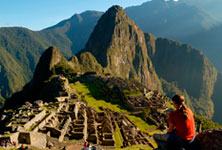
Machu Picchu is known as one of the most spiritual lands in the world, so why not go all out and Om your way through its ruins? Amazing Peru offers a seven-day yoga tour where visitors travel from Lima to Cuzco and finally to Machu Picchu, where they stay in the famed sanctuary Lodge hotel right outside of the ruins. They participate in multiple meditation and yoga sessions throughout the trip, but the highlight is a private session smack-dab in the middle of the ruins. Now that is an Om experience worth waiting for."
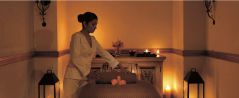
Wellness & Health Travel and Tours
A round Peru and Latin America tours specifically created for those who need to recharge their physical and mental energies. A nurturing and enlivening...
Private Jet Charters in Peru and Latin America (View here)

- Christmas in Galapagos & Ecuador Travel
- 2026-27 Christmas in Galapagos & Peru New Year Tour
- 2026-27 Christmas in Galapagos & New Year's in Brazil
- Christmas in Peru and Machu Picchu 2026/2027 - View all
- Christmas Brazil Amazon Cruise
- Christmas Vacations in Costa Rica
- Christmas and New Year in Ecuador & Galapagos Islands
- Christmas and New Year in Chile
- Christmas Vacations in Argentina
- 2026 Christmas Peru and Galapagos Tour
- 2026 Christmas Peru and New Year's Galapagos Tour
- Mexico Christmas and New Year
- New Year's in Peru 2026/2027
- New Year's in Brazil
- Christmas Brazil Tour: Iguazu Falls, Amazon River Cruise from Manaus
- Christmas and New Year's in Latin America 2026/2027
- Brazil & Peru Christmas Highlights Tour - 15 days
- Christmas in Antarctica
- Christmas in the Sun & Beaches
- Winter Christmas & Ski Holidays
- Christmas Cruises
- New Year Getaways

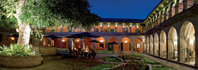
Incl. Miraflores Park, Monasterio & Sanctuary Lodge Hotels, all trains, all private tours, finest service guaranteed


Adan
USA
11th November 2026

Theresa W.
SINGAPORE
9th November 2026
- Ultra Luxury-Luxury Retreat Collection
- Luxury Travel Peru
- Luxury Travel Argentina
- Luxury Travel Brazil
- Luxury Travel Chile
- Luxury Caribbean Trips
- Luxury Travel Galapagos
- Luxury Travel Ecuador
- Luxury Travel Machu Picchu
- Luxury Travel Patagonia
- Luxury Travel Iguassu Falls
- Luxury Travel Mexico
- Luxury Travel Guyana
- Luxury Travel Costa Rica
- Luxury Travel Antarctica
- Luxury Travel Panama
- Luxury Travel Peru & Brazil
- Luxury Travel Peru & ecuador
- Luxury Travel Peru & Costa Rica
- Luxury Travel Peru & Mexico
- Luxury Travel Cuba
Free Cuzco & Machu Picchu Travel Guide
Cusco Tours & Travel Packages
Trekking Tours around Cusco
Cusco Hotels
Cusco Restaurants
Cusco Churches
Cusco Museums
Cusco Archeological sites
About Cusco History
Cusco Food and Drink
Sacred Valley of the Incas
Watch our Inca Trail - Videos here
Watch our Gourmet Tour - Video here
- Peru tours, travel & vacations
- Galapagos tours & cruises
- Ecuador tours, travel & vacations
- Chile tours, travel & vacations
- Brazil tours, travel & vacations
- Bolivia tours, travel & vacations
- Argentina tours, travel & vacations
- Surinam tours, travel & vacations
- Venezuela tours, travel & vacations
- Mexico tours, travel & vacations
- Honduras tours, travel & vacations
- Costa Rica tours, travel & vacations
- Cuba tours, travel & vacations
- Panama tours, travel & vacations
- Tahiti tours, travel & vacations
- Guyana tours, travel & vacations
- Bora Bora tours, travel & vacations
- Antarctica tours, travel & vacations
- Luxury Caribbean tours, travel & vacations

Private jet & helicopter charters throughout Peru and Latin America.
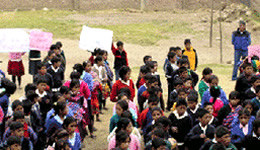
AMAZING PHILANTHROPY
Helping children in one of Peru's poorest village schools supporting hands-on initiatives such as implementation of classrooms to ensuring the robust education, health, and well-being of young children
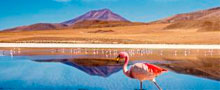

AMAZING PHILANTHROPY
As part of our philanthropic projects we support the older community to promote sporting and social events in the lesser known regions of Peru.




Honoured to include to distinguished clients by providing jet services and luxury travel in Peru and Latin America
- Robert De Niro Hollywood Actor, Producer & Director
- Zygmunt Solorz-Żak Businessman Forbes Top 100 World's Billionaire
- Diana Raab American Author • Poet • Lecturer Educator and Inspirational Speake
For more information to join our Hiram Bingham Club visit The Hiram Bingham Club © by Amazing Peru:
The Hiram Bingham Club is an exclusive circle of our most passionate & loyal guests - like-minded individuals who want to experience the highest standard in authentic ultra-luxury travel. We have the World’s Most Exclusive Experiences. Venture Beyond the Extraordinary.
